Design Museum Gent Reopens with a ‘Waste Wing’


A 3D-printed aluminium gate, bricks made from building waste and a lofty view over Ghent: Design Museum Gent’s transformation begins well before you reach an exhibition. After four years of renovation and expansion, Belgium’s largest design museum reopened on 3 October 2026 with a new wing that gives you plenty to look at—and think about.
On my visit, I found myself examining the building as closely as its contents. A patchwork of reused timber just inside the entrance, a column incorporating demolition spoil in the shop, curtains with the presence of tapestries: ordinary museum fixtures have become reasons to stop and look. Even the toilets have received the sustainable-design treatment.
Building a Future from Ghent’s Past
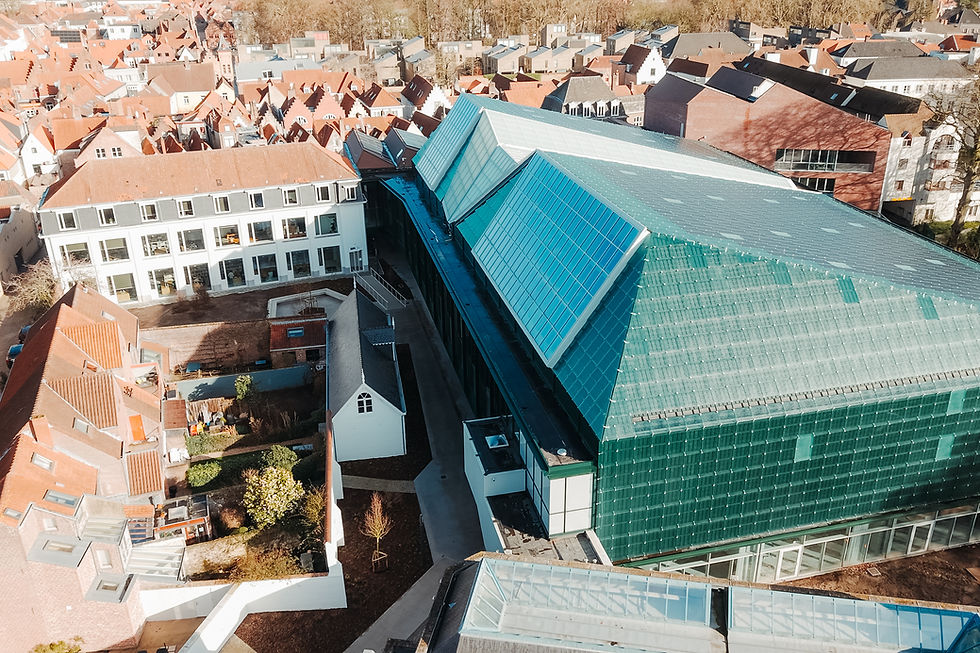
The new white wing made of Gent Waste Bricks connects a collection of buildings spanning the 16th to 20th centuries. Architecture firms Carmody Groarke of London and ATAMA of Ghent designed the new wing and RE-ST of Antwerp managed the historic restoration. Together, they have made a previously fragmented site easier to navigate while preserving its architectural character.
The façade’s white finish is in keeping with historic houses on Drabstraat. Look closer, though, and its material tells a contemporary story. Developed by Carmody Groarke with BC Materials, the Gent Waste Brick is made with locally sourced construction waste and cured with lime, avoiding the energy-intensive firing of conventional bricks.
More than 82,000 Gent Waste Bricks were produced at Het Arsenaal in the city, where residents could watch the process. Around 140 tonnes of construction waste went into the bricks, 70 per cent of which was locally sourced. Fragments of concrete, glass and porcelain have found a new home on the museum’s walls.
Their dimensions echo the bricks of the 18th-century Hotel De Coninck, the mansion at the heart of the museum. That small detail neatly connects the old building with the new. Inside the extension, timber adds warmth, while large windows, open staircases and glass balustrades allow views through the building and towards the large courtyard.
Design You Can Walk Through
The new entrance is at Drabstraat 10, around the corner from the museum’s former front door. It comes with an unusually sculptural welcome: Freeze Frame 82.2, a 3D-printed aluminium gate by Belgian design studio Unfold. It resembles a frozen curtain. This door is one of around 15 Special Design Projects, curated by Siegrid Demyttenaere, that bring commissioned work into everyday use throughout the museum.
The courtyard now serves as a garden and a visual reference point as you move between buildings. Above it, the new wing accommodates spaces for talks, workshops and temporary displays. On the top fourth floor, the Loft event space offers among the best panoramic views of Ghent, revealing every landmark.
Belgian Design in Good Company
The renewed Collection: Models from the Past for the Future, brings together around 500 objects from the museum’s 24,000-piece collection. Some 40 percent of the selection has never previously been shown to the public.
Belgian names including Victor Horta, Henry van de Velde, Gustave Serrurier-Bovy and Maarten Van Severen appear alongside international designers such as Alvar Aalto and Charles and Ray Eames. Five themes—copy, comfort, migration, folding and connections—encourage visitors to consider how objects relate to the way we live.
The historic rooms have new roles, too. In eight period rooms of Hotel De Coninck, CO-LAB explores what designers, researchers and communities can make together, including projects involving sustainable energy and designing with nature. The ornate setting makes an intriguing backdrop to these experiments.
Designing Democracy
The opening exhibition, Public Matter(s): Design and Democracy, expands the definition of design to include the systems through which we organise society. Who is included and who struggles to be heard? Subjects range from voting access to protest and the possibility of giving nature legal rights. The accompanying Democracy Workout invites visitors to practise listening, compromise and constructive disagreement. Both this exhibition and CO-LAB run until 11 April 2027.
There are other ways to enjoy the museum. CONNECT, running until 10 January 2027, encourages touching and experimentation. In Studio Digitaal, the Searcher installation uses artificial intelligence to uncover relationships between collection objects through features such as colour and form.
Plan Your Visit
That invitation to get involved extends to the building itself. You can enter the new wing and garden free of charge, whether you are planning a full museum visit or simply dropping in. For me, that is one of the renovation’s most appealing features: a generous new place to spend time in Ghent, with design all around you.
Design Museum Gent’s new wing, panoramic view, inner garden, café, shop and toilets are freely accessible; the collection and temporary exhibitions require a ticket.


Comments