Modern BRUSK in Medieval Bruges

Bruges is famous for its canals, Gothic architecture and masterpieces by the Flemish Primitives. But the city's newest cultural landmark proves that this medieval gem isn't living in the past. The highly anticipated BRUSK opened in May 2026, offering Bruges a first: a major venue dedicated to world-class temporary exhibitions that bring historic and contemporary art together under one roof.
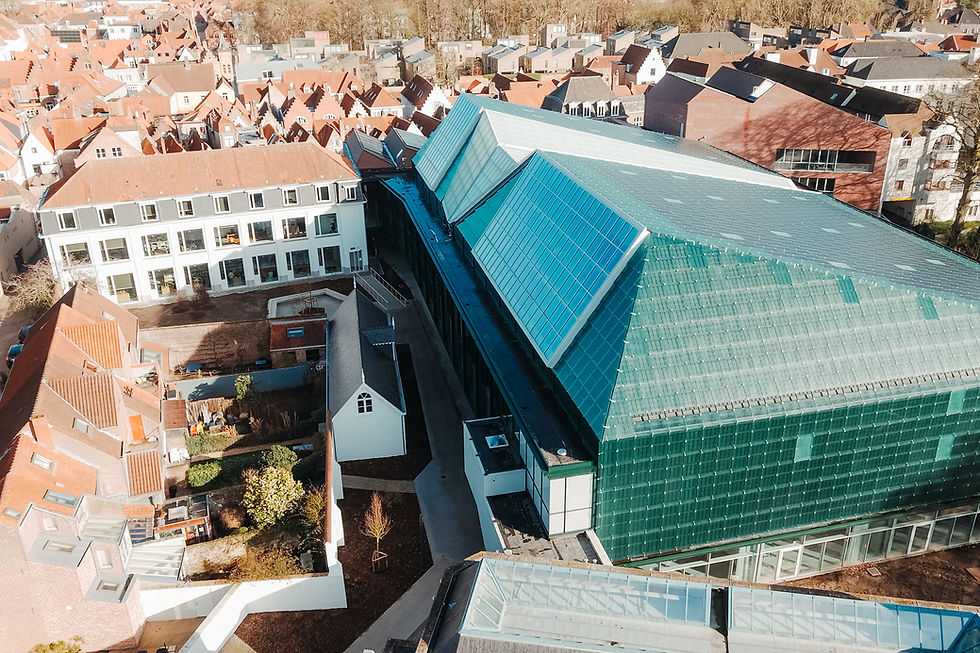
What makes BRUSK memorable begins steps before the entrance. Hidden behind medieval streets near the beguinage, the museum doesn't immediately reveal itself. You enter through a long passageway that winds past centuries-old brick houses before opening onto a striking contemporary building of glass and steel. The transition feels deliberate, almost theatrical, as if Bruges is slowly introducing you to its modern side.
The architecture itself deserves attention. Designed by Ghent-based firm Robbrecht en Daem in collaboration with Olivier Salens architects of Bruges, BRUSK was conceived as a contemporary addition to a historic city. Amazingly, it does not feel out of place. Perhaps because you discover it gradually. In addition, the building connects visually with Bruges through coordinated colours and rooflines that subtly echo the city's historic churches.
Inside, the building feels airy and monumental. Two enormous exhibition halls provide space for world-class temporary exhibitions, allowing Bruges to host major international loans alongside contemporary art installations. Because exhibitions will change several times a year, there is now a compelling reason to return to Bruges again and again.
One of the first things that catches the eye is the Scala, a light-filled passageway that connects different parts of the building. Here, acclaimed French artist Laure Prouvost has created The Whispering Walls Rêve, a monumental fresco inspired by her visits to Bruges and conversations with residents. Combined with natural light pouring through the glass structure, it creates an atmosphere that feels both welcoming and ethereal.
Natural light was an architectural priority. Inspired by artists' studios, the exhibition halls combine northern and southern light in a way that creates exceptional viewing conditions while protecting artworks.
The museum is also remarkably sustainable. Its roof incorporates nearly 1,300 square metres of electricity-generating photovoltaic glass, while an underground geothermal system helps heat and cool the complex.
Opening Exhibitions
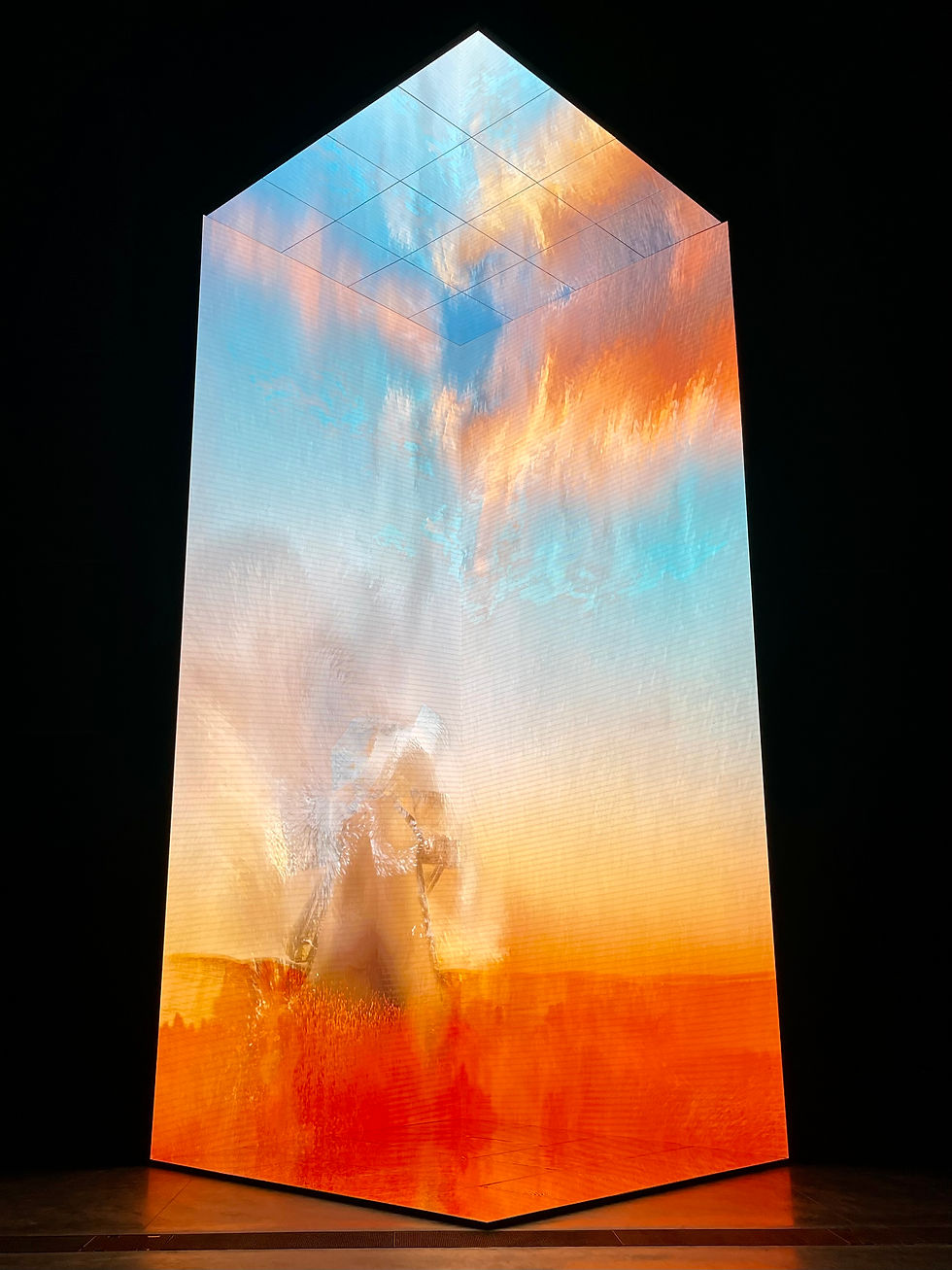
For its first season, BRUSK has two exhibitions that perfectly reflect its mission of connecting the past and present. “Bigger Picture” explores how Bruges became an international city between 990 and 1550 through connections with merchants, diplomats, pilgrims and scholars from across Europe and beyond. In sharp contrast is “Latent City,” a spectacular digital installation by Turkish-American artist Refik Anadol. Using artificial intelligence and hundreds of thousands of historical and contemporary images, he created a constantly evolving visual landscape displayed on a towering sculptural screen.
These exhibitions capture what BRUSK is all about: bringing together seemingly opposite things and discovering their unexpected connections.
More than just a new temporary exhibition space, BRUSK signals a new chapter for Bruges. It demonstrates that a city celebrated for medieval heritage can also embrace innovation, experimentation and contemporary culture.
For those who think they already know Bruges, BRUSK offers a refreshing reminder that this UNESCO-listed historic city is still evolving.
Tip: Leave time to enjoy the freely accessible ground floor, which includes Bar Brusk – open after exhibition hours – a shop and inviting public spaces that don’t require a ticket.


Comments